


This is Seeking Rents, a newsletter and podcast devoted to producing independent journalism about Florida politics, with an emphasis on the ways that big businesses and other special interests influence public policy in the state. Seeking Rents is produced by veteran investigative journalist Jason Garcia, and it is free to all. But you can support my work by becoming a paid subscriber and/or by making a one-time donation.
Welcome to another installment of Florida in Five: Five* stories you need to read from the past week in Florida politics.
There’s a potentially lucrative tax break for the marijuana industry hiding on this year’s ballot.
It’s baked inside Amendment 2, the proposed constitutional amendment that would eliminate all property taxes paid by agricultural companies on what’s known as “tangible personal property” — which is more commonly called “TPP” and includes things like machinery, equipment, furniture and fixtures.
The proposal was placed onto the ballot by Florida’s Republican-controlled Legislature amid lobbying by front groups like the Florida Chamber of Commerce, which gets lots of funding from the state’s two Big Sugar companies: Florida Crystals and U.S. Sugar Corp. Supporters are billing it as badly needed tax relief for Florida farmers and ranchers.
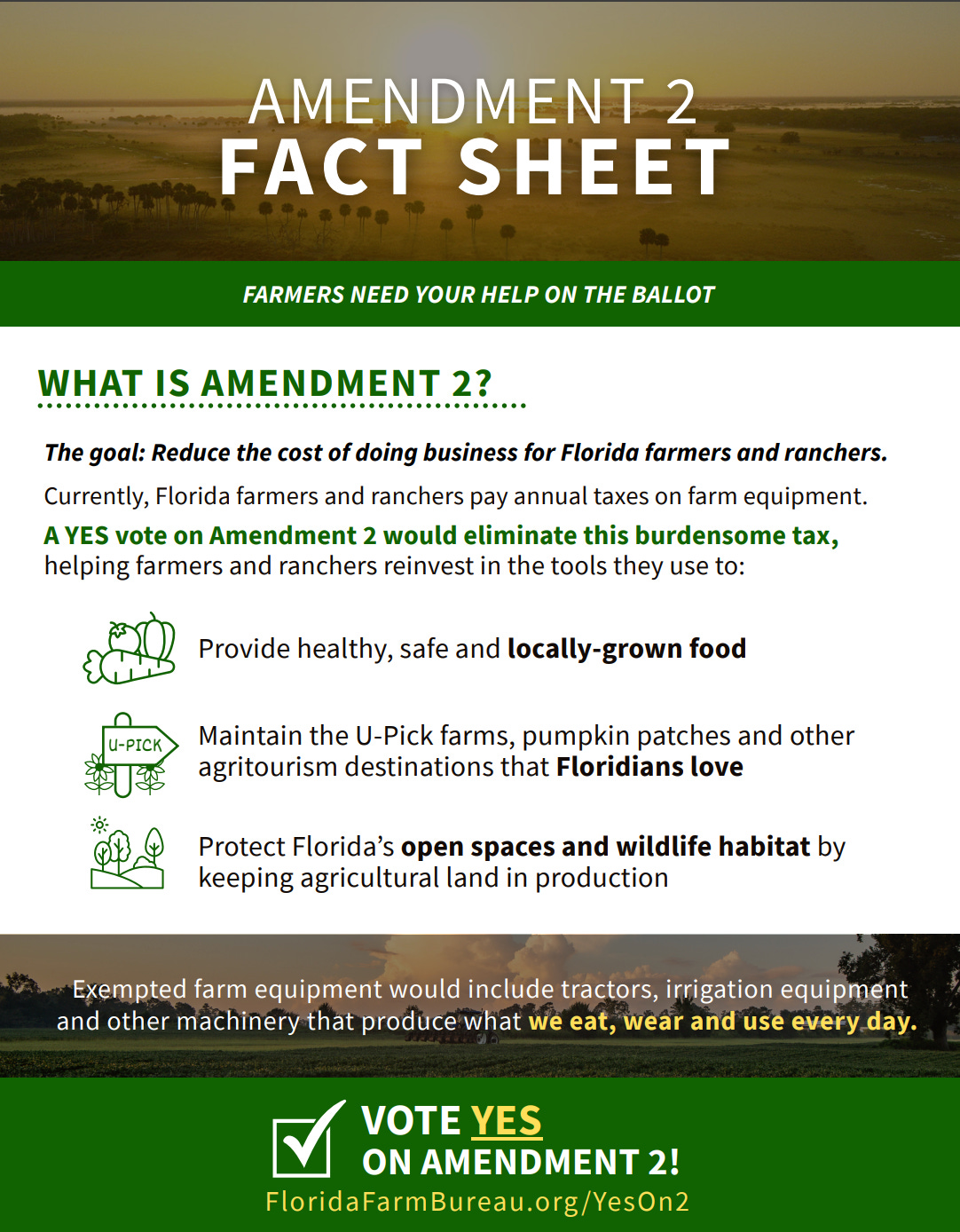
The challenge with Amendment 2 — one of several — is that some of the most valuable tangible personal property used in Florida agriculture belongs to companies that grow, process and sell marijuana, which is legal in this state for medicinal use.
In fact, a Seeking Rents analysis finds that at least 10 percent of the estimated tax savings under Amendment 2 would got to cannabis companies like Curaleaf, Trulieve and MÜV.
Let me explain how I arrived at that estimate.
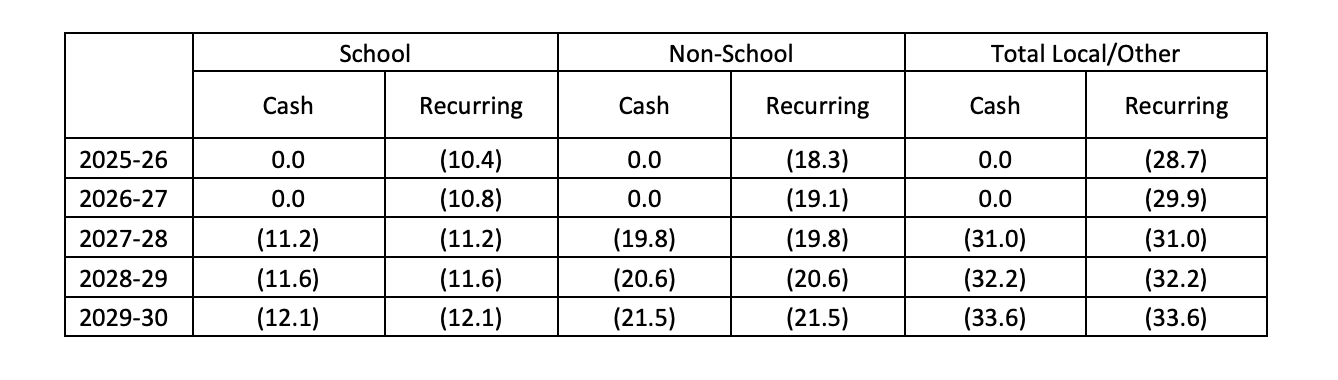
First, when state economists “scored” Amendment 2 — that is, when they estimated how much the tax break would save companies but cost cities, counties and school districts that rely on property taxes to fund their operations — they began by combing through the state’s property rolls and pulling all the TPP accounts submitted with an agricultural industry classification code.
They found more than 18,000 agricultural TPP accounts — which together add up to roughly $1.7 billion in taxable value. They then applied the average statewide property tax rate to estimate how much the owners of those accounts currently pay in property taxes — and how much they would save if those taxes were completely wiped out.
(Note: More than three-quarters of those 18,000-plus agricultural TPP accounts are tiny accounts with zero taxable value in them because of an existing tax break that exempts the first $25,000 in value from taxation.)
I did the same thing. But then I went back through the agricultural TPP accounts searching for companies involved in the cannabis industry. A relatively rudimentary search turned up more than three dozen marijuana-related accounts holding tangible personal property with a combined taxable value of roughly $170 million.
That’s 10 percent of the overall taxable value — and thus 10 percent of the estimated tax savings.
Now, there are some caveats here. Under Amendment 2, tangible personal property used in agriculture will only qualify for a total tax exemption if it is located on underlying land that is also classified as agricultural and it is owned by the same company that owns or leases the underlying land.
It’s possible that some of the TPP owned by these cannabis companies may not meet those other tests.
Would you like to support Seeking Rents without becoming a subscriber?
Already a paid subscriber but want to do more to help sustain my work?
Click below to make a one-time donation.
On the other hand, it’s also possible that this analysis — both mine and the overarching estimates by state economists — understate the potential impact of Amendment 2.
Why? Because there is an awful lot of tangible personal property around Florida that is owned by agricultural companies — from U.S. Sugar to Trulieve — but is currently held in accounts submitted under non-agricultural industry classification codes.
It’s possible — likely, even — that companies will try to claim tax exemptions for much of that property, too, should Amendment 2 pass.
And then there’s another important point to consider: Much of the tax savings from Amendment 2 would ultimately flow to a few giant agribusinesses that have come to dominate their respective sectors following years of industry consolidation.
For example, a review of the agricultural TPP accounts shows that JBS USA, one of the country’s biggest beef producers, could get a tax cut of at least $1.8 million a year.
Florida Crystals’ tax bill could drop by more than $1.2 million a year.
And Curaleaf — the country’s biggest cannabis company — could pocket at least $900,000 a year.
Upcoming events
I had a wonderful time in Sarasota yesterday, where I joined WSLR’s “Talk of the Town” news roundtable to discuss money and PACs in local elections and then spoke at a forum on rent-seeking and resource extraction organized by the Social Justice Alliance of the Florida Suncoast.
For anyone who missed them, you can watch the Talk of the Town episode here. And you can watch my speech at the “Florida’s Resource Grab” forum — as well as an in-depth panel that dove into issues like data centers, detention centers and school privatization — here.
We’ve got a more event coming up this week, too.
I will be in Tallahassee on Wednesday, Oct. 14, to speak to students in the Askew School of Public Policy at Florida State University (more info) and to moderate a town hall on Amendment 3 sponsored by the Askew School (more info).
I will then be in Clermont on Thursday, Oct. 15, as part of another Amendment 3 panel, this one organized by Braver Angels (more info).
And I will be at the Barry University School of Law in Orlando on Friday, Oct. 16, to moderate a pair of panels — one about water policy legislation, the other about the impacts of data centers — at an “Environmental Advocacy Symposium” organized by Orange County Commissioner Nicole Wilson (more info).
*To paraphrase Barbossa, five is more what you’d call a guideline than an actual rule.
More than $400K in taxpayer-funded legal fees
How state officials fought for months to keep a lid on Hope Florida report (Florida Trib)
See also: Appeals court strikes down grand jury report in Hope Florida case; DeSantis declares victory (CBS News Miami)
See also: Court erases Hope Florida grand jury report after shutting out anyone who would defend it (Florida Trident)
See also: Judge who struck Hope Florida report is DeSantis appointee with government background (Tampa Bay Times) ($)
See also: DeSantis: ‘Bring criminal charges’ in Hope Florida leak (Tampa Bay Times) ($)
See also: Orange state attorney Worrell pursues criminal investigation of Hope Florida (Orlando Sentinel) ($)
See also: ‘It’s still an issue’: Rick Scott demands Hope Florida answers, clashing with DeSantis (Tampa Bay Times) ($)
The most important race on the ballot
Jose Javier Rodriguez gets $5 million national injection for Florida AG race (Tampa Bay Times) ($)
See also: DeSantis appointee’s family complained about a teacher. Uthmeier called for her firing (Suncoast Searchlight)
‘No accountability because they own the political process’
Florida ‘ghost’ candidate scandal haunts FPL in merger talks with Dominion (Tampa Bay Times) ($)
See also: Virginia hearing examiner tells Dominion to release memo on FPL investigation (Utility Drive)
See also: NextEra and Dominion Energy look to restrict ‘Robo Memo’ access (CBS 6)
See also: ‘Ghost candidates’ haunt Pasco County elections. What are they? (Tampa Bay Times) ($)
From yes to no
Passidomo says she’ll vote against Amendment 3 (Gulfshore Business)
See also: Hospital systems eye impact of possible Amendment 3 passage (Politico Pro) ($)
See also: Suncoast nonprofits preparing for potential cuts if property tax amendment passes (Suncoast Searchlight)
See also: School tax proposals will share ballot with Amendment 3, prompting fears about voter confusion (Florida Trib)
How to build a publicly subsidized baseball stadium
From Donalds to local pols, Rays owners spent big ahead of midterms (Tampa Bay Times) ($)
See also: Data center backlash tests Byron Donalds campaign for governor (USA Today Network – Florida) ($)
See also: One crucial Democratic constituency is up for grabs (Vox)
Nice work if you can get it
Sarasota County commissioner’s husband paid $42K by lobbyist for developers (Suncoast Searchlight)
See also: First agriculture enclave issue reaches Marion County Commission (Ocala Gazette) ($)
See also: Decision on Manatee County impact fee lawsuit expected (Tampa Bay Beacons)
See also: Seminole County planning commissioners reject requested rural boundary change (Central Florida Public Media)
See also: Growth could be coming to this rural Hillsborough hamlet off I-75 (Tampa Bay Times) ($)
See also: Florida cracked down on dirty runoff. Now, it may give polluters a workaround (Tampa Bay Times) ($)
See also: King tide side effect: Floridians ‘stranded’ after floods zap high rise elevators (Miami Herald) ($)
Florida’s other immigrant prison
Out of Sight in North Florida: Life Inside Deportation Depot (Mother Jones)
Perspectives
Scandal-plagued Uthmeier has never been elected. He never should be. (Orlando Sentinel) ($)
Florida’s judicial election challenge? Sweep the Bench (Florida Times-Union) ($)
Florida county wants motocross course on land bought for conservation (Florida Phoenix)
How to buy an election, with taxpayers’ help (South Florida Sun-Sentinel) ($)

I heard Jason speak yesterday in Sarasota. Wow! We should all support his work with paid subscriptions. Thank you, Jason, for your bold move to independent journalism!
JBS USA is a wholly owned subsidiary by Brazilian agro giant JBS S.A.. Florida residents lose public services so a foreign-owned agribusiness can pad its profits. So much for America First! Trump beef imports.... remember the tainted Brazilian beef scandal??? The EU bans Brazilian beef because it's judged insufficiently controlled on antibiotic use and Brazil couldn't guarantee antimicrobial traceability Yuck! And Trump gutted the FDA and USDA inspection services and there's been record Brazilian beef imports to the USA! And explosive diarrhea. You are what you eat.