
Lobbyists for a billionaire and a charter network pushed Florida lawmakers to expand a school privatization program, records show
Miami billionaire Ken Griffin and New York charter school chain Success Academy lobbied for a new law that dramatically expands Florida's "Schools of Hope" program.

This is Seeking Rents, a newsletter and podcast devoted to producing original journalism — and lifting up the work of others — about Florida politics, with an emphasis on the ways that big businesses and other special interests influence public policy in the state. Seeking Rents is produced by veteran investigative journalist Jason Garcia, and it is free to all. But please consider a voluntary paid subscription, if you can afford one, to help support our work. And check out our video channel, too.
A billionaire hedge-fund manager and a New York City charter network lobbied to expand a school-privatization program in Florida, according to records obtained by Seeking Rents.
The two-month old state law has set the stage for a potentially massive expansion of Florida’s “Schools of Hope” program, in which charter school operators can get lucrative cash grants and low-interest loans if they open up new schools in certain areas around the state. It has already resulted in a more than five-fold increase in potential locations for the heavily subsidized charter schools, which are public schools managed by private entities.
The privatization legislation was a top priority for Republican leaders in Tallahassee — including Gov. Ron DeSantis and House Speaker Danny Perez (R-Miami), who made sure to get it done even as they clashed over a host of other issues during a dysfunctional legislative session that dragged on more than a month longer than expected amid the infighting. Legislative leaders ultimately tacked the measure onto a last-minute budget bill that they passed just before finally gaveling their 2025 session to a close.
“I’m glad we were able to work with the Legislature to get that through in this extended session,” DeSantis said two weeks later, when he signed the legislation into law.
They got it through, at least in part, at the behest of Ken Griffin, the billionaire investor and Republican megadonor in Miami, and Success Academy, a prominent charter school system in New York City known for impressive test scores and graduation rates but also cherrypicking the families it chooses to teach and pushing out kids with behavioral problems.
Lobbyists for Griffin and Success Academy engaged in an extensive behind-the-scenes lobbying campaign for the privatization legislation, according to emails obtained through a series of public records requests.
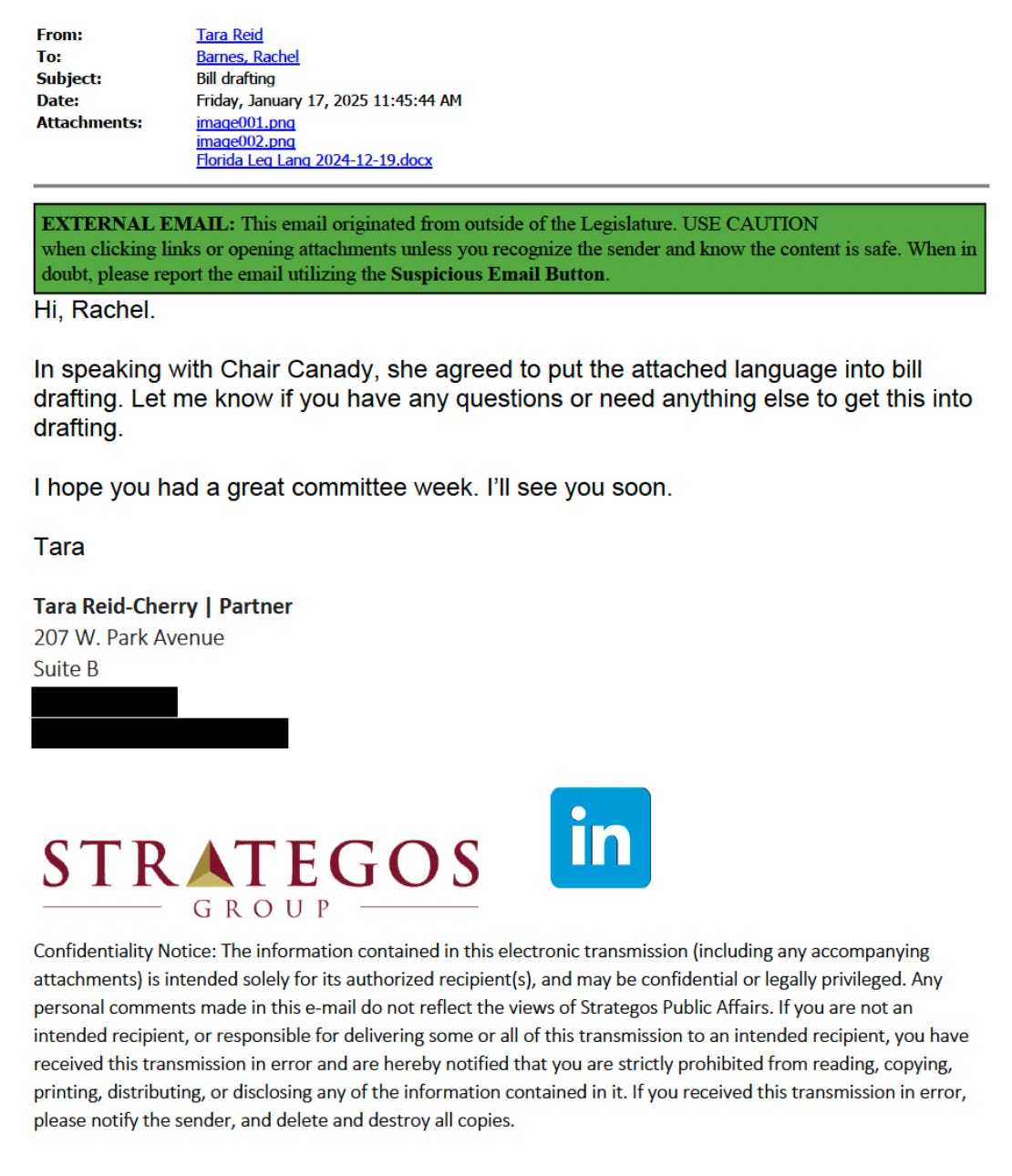
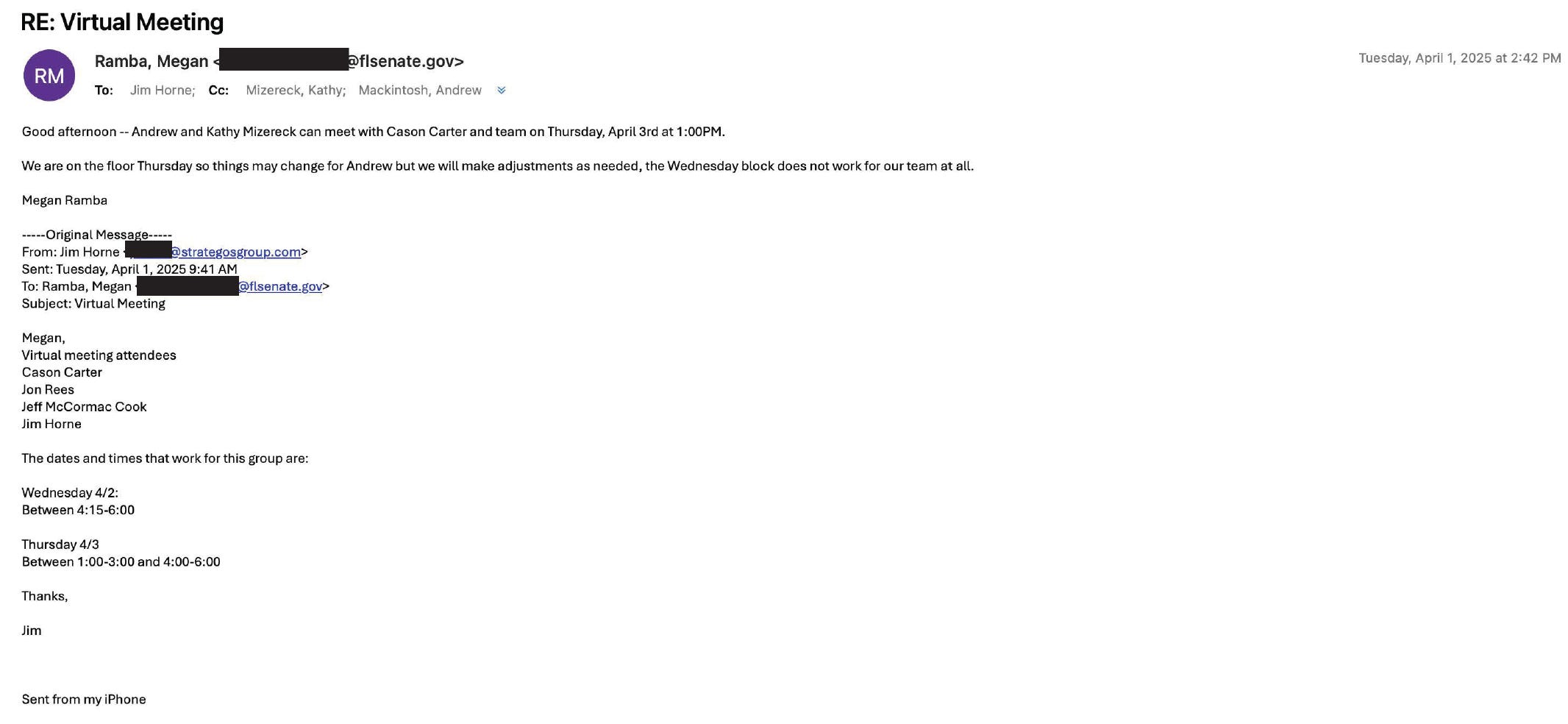
The records show, for instance, that they worked on the bill with Rep. Jennifer Canady (R-Lakeland), a future speaker of the state House who currently leads the chamber’s top education committee. They also arranged meetings to discuss their proposal with Senate President Ben Albritton (R-Wauchula) and some of his senior aides.
Success Academy wrote an initial draft of the legislation. Griffin’s team gathered intel.
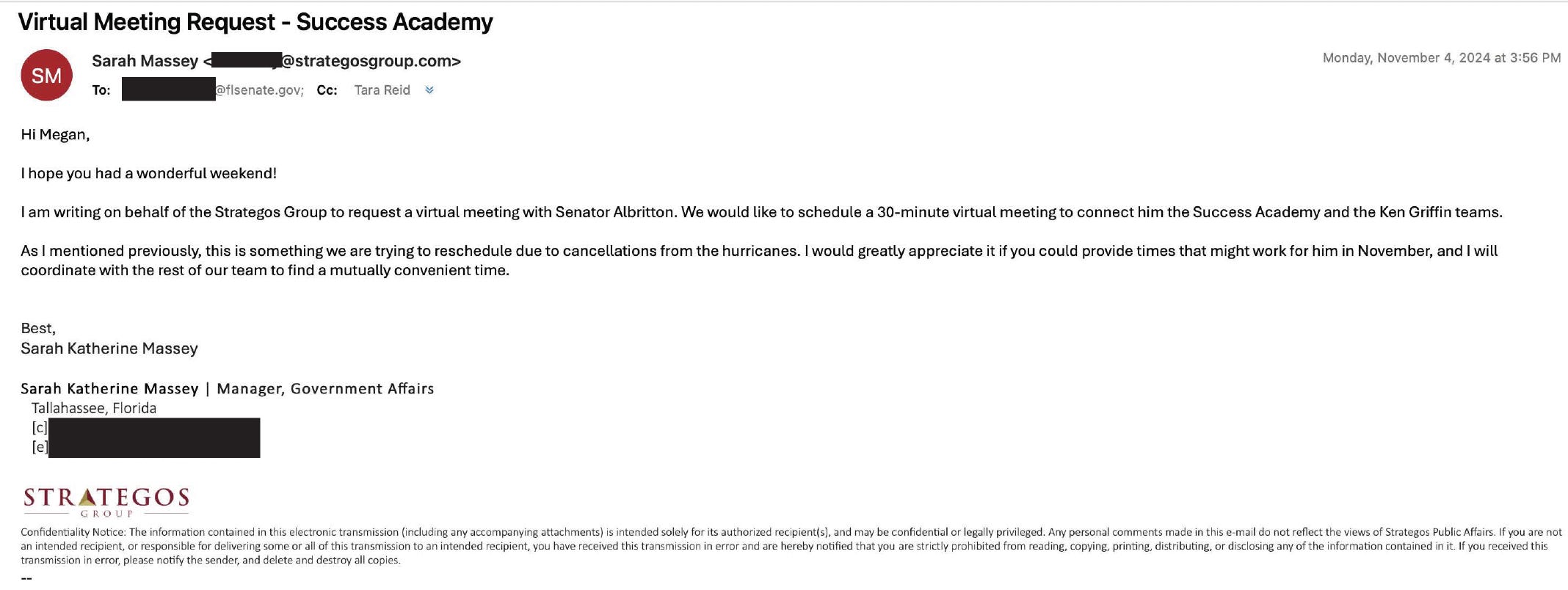
The lobbying blitz may not be over. The records also show that Success Academy wants an enormous infusion of taxpayer money — beyond the existing subsidies Florida already offers through the Schools of Hope program.
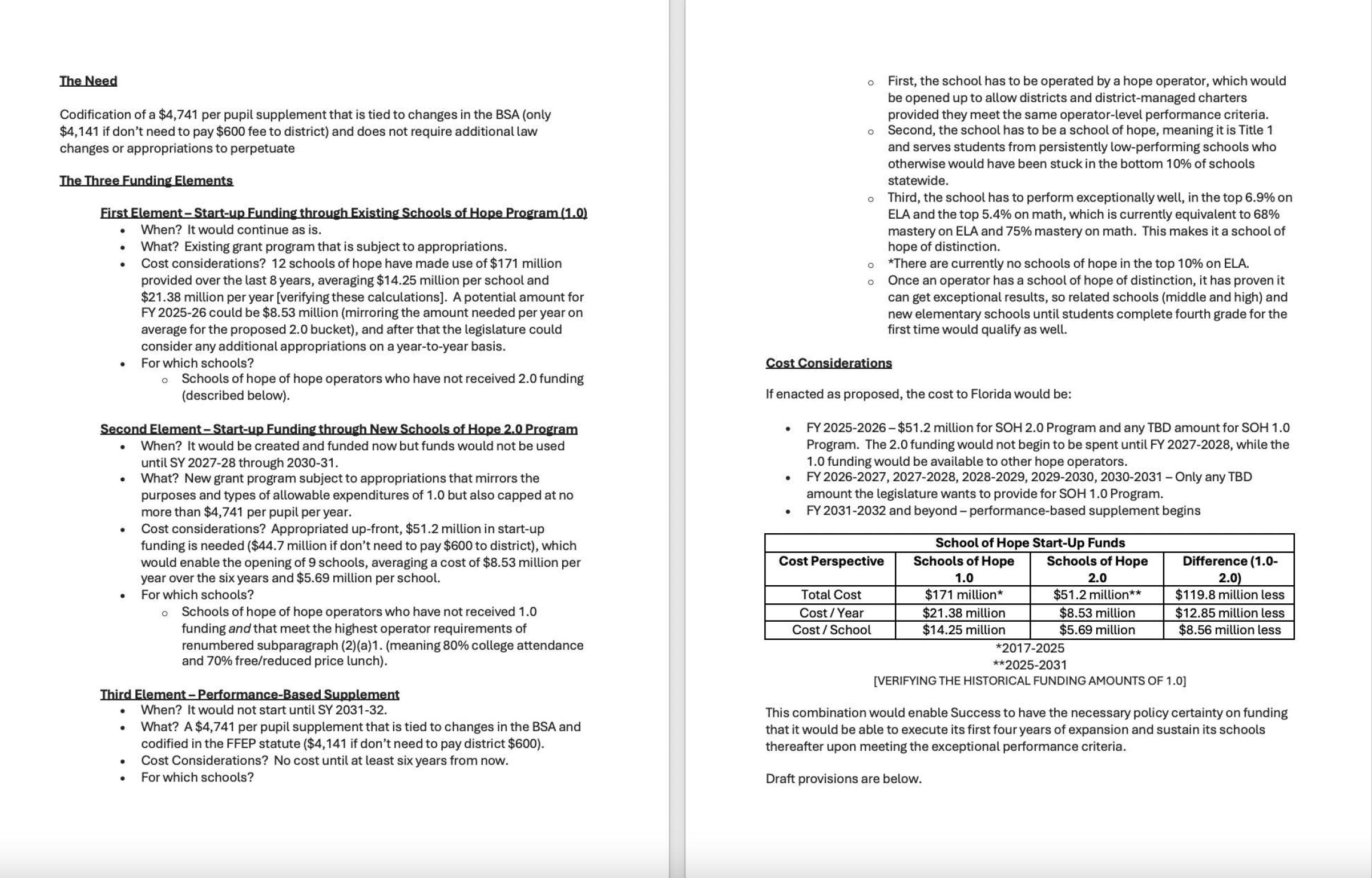
In a funding document sent to lawmakers and legislative staffers, Success Academy proposed roughly $50 million over the next few years to cover start-up costs for nine new schools in Florida — plus a perpetual bonus of as much as $5,000 a year for every student Success Academy serves.
“This combination would enable Success to have the necessary policy certainty on funding that it would be able to execute its first four years of expansion and sustain its schools thereafter upon meeting the exceptional performance criteria,” the funding document reads.
Representatives for Success Academy did not respond to emailed questions.
Griffin declined to answer detailed questions. But a spokesperson for Citadel, the hedge fund that Griffin founded and moved from Chicago to Miami in 2022, noted that Griffin is a major supporter of Success Academy and pointed to a statement he made to Bloomberg praising the new Florida legislation.
“Florida has long been a national leader in advancing school choice, and this outcome is a huge win for the people of our state,” he told the business-news publication in July.
The recent Florida transplant with a roughly $50 billion net worth has rapidly become one of the most influential figures in the state. Records show Griffin made more than $28 million in state and local campaign contributions during Florida’s 2024 elections — an enormous sum for a single person at the state level.
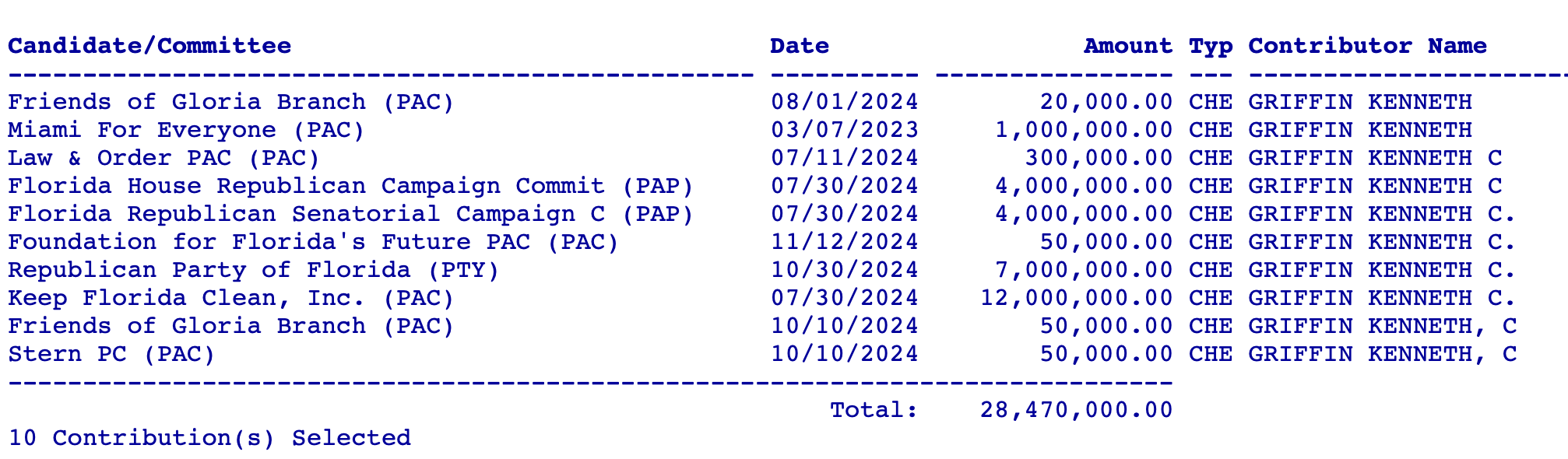
Griffin’s biggest single state donation was $12 million gift to a political committee that was personally important to Ron DeSantis and used to oppose a proposed ballot measure that would have legalized marijuana. But he also gave $4 million each to campaign committees led by Perez and Albritton, the House speaker and Senate president.
The billionaire was also behind another new law passed this year by Florida’s Republican-controlled Legislature that enables businesses to bind workers to longer and stronger non-compete contracts. DeSantis allowed the anti-worker legislation to become law — though the governor tried to do so quietly.
Success Academy, meanwhile, has been developing expansion plans for Florida for at least a year. The charter network currently operates only in New York, but it has applied for and received approval from state education officials to participate in Florida’s Schools of Hope program.
And Success Academy will now have far more flexibility about where it can locate schools it opens through the program — thanks to the new law it helped write.
Launched in 2017, the Schools of Hope program generally offers taxpayer-funded grants and loans to selected charter school networks that open up new schools near traditional public schools that have been deemed “persistently low performing.” There are currently about a dozen Schools of Hope scattered around the state.
Republican leaders and school-choice advocates initially pitched it as a way to create alternatives for families whose children are otherwise stuck in a chronically failing public school simply because of where they live.
But the new law expands the program far beyond a few struggling school zones.
That’s because it rewrites the rules in a way that has resulted in many more public schools being designated as “persistently low performing” — even some schools that seem to be doing very well by the state’s own metrics.
The Florida Department of Education’s just-revised list of persistently low-performing schools has 267 schools on it. That’s more than five times the 51 schools on last year’s low-performing list — before Ken Griffin and Success Academy lobbied to change the definition.
There are a dozen A-rated schools that state of Florida now claims are “low performing.” There are nearly three dozen B-rated schools on the new list, too.
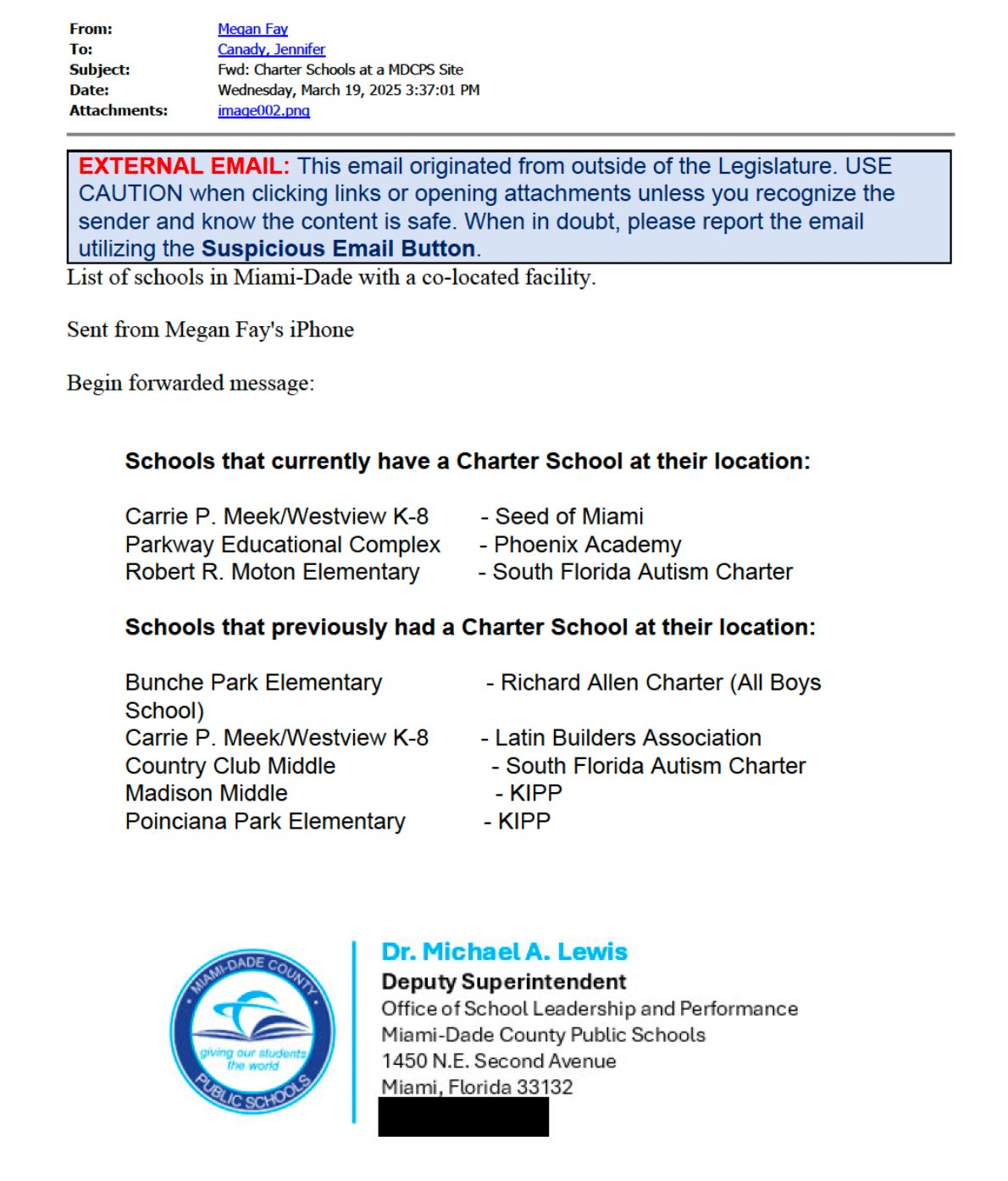
That’s not nearly the extent of the changes. The new law also allows a charter network to open a School of Hope many miles away from the low-performing public school whose students it is ostensibly meant to serve. The law even makes it possible to open a School of Hope that doesn’t serve any students at all from a low-performing school.
What’s more, the bill forces school districts to let charter operators open up a School of Hope inside an existing traditional public school if the building is not at maximum capacity — while simultaneously forbidding the school district from charging the charter operator any rent.
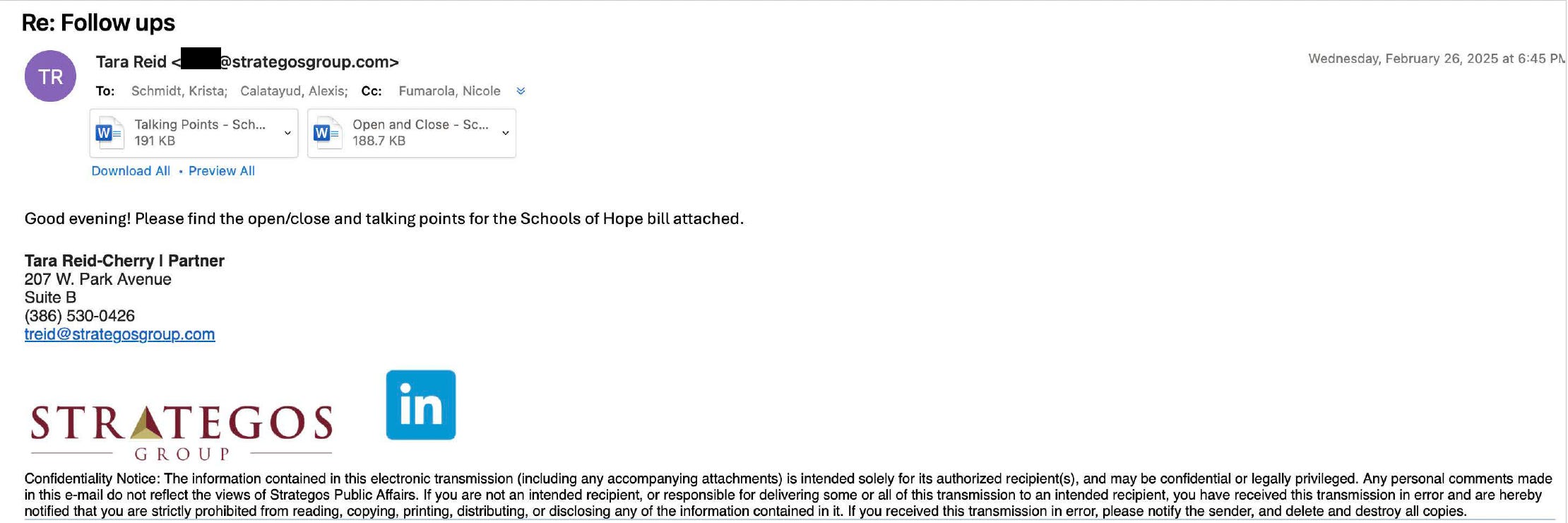
In materials given to lawmakers, Success Academy expressed frustration with the former constraints on the Schools of Hope program.
“In the seven years since the program began, some of the highest-performing charter schools are still not choosing to come to Florida,” read talking points that a Success Academy lobbyist gave to lawmakers to repeat during public hearings on the legislation. “We have made so much progress on school choice, but we have not yet been able to attract these operators.”
But the combined effect of these new changes is that charter networks will be able to open up schools in many more locations — even in affluent communities or places with highly rated traditional public schools — while still tapping into multimillion-dollar public subsidies through a program that was supposed to be a lifeline for kids in very poor communities. They can even take over part of a traditional public school building, rent-free.
The DeSantis administration is moving quickly to implement the changes. The governor-appointed State Board of Education will meet Sept. 24 in Fort Walton Beach, where it is expected to vote on a new statewide rule spelling out how the expanded Schools of Hope program will work.
Correction: An earlier version of this story misstated a lobbyist’s connection to Ken Griffin.
The expansion of charter schools goes right along with Desantis trying to get rid of property taxes. This will allow the rich to take over public schools, fire departments, and law enforcement to continue to profit off the backs of the working folks.
Hey Kids - if you graduate from one of these schools - I won’t hire you. I’m serious. The standards I’ve seen from these private schools are so low - I don’t have the resources to teach and train you