

This is Seeking Rents, a newsletter and podcast devoted to producing independent journalism about Florida politics, with an emphasis on the ways that big businesses and other special interests influence public policy in the state. Seeking Rents is produced by veteran investigative journalist Jason Garcia, and it is free to all. But you can support my work by becoming a paid subscriber and/or by making a one-time donation.
Developers across Florida are racing to take advantage of a new law enacted by Gov. Ron DeSantis and the state’s Republican-controlled Legislature that makes it much easier to turn farms into suburbs.
Records show that lawmakers in Tallahassee worked closely with lobbyists for major developers on the legislation, which strictly limits to the power of locally elected county commissions to prevent development of agricultural lands on the fringes of cities and towns. The month-old law is already being used to resurrect controversial projects that had been previously rejected by local community leaders as unwanted urban sprawl.
The suddenly revivified subdivisions include “Adler Creek,” which could replace 600 acres of timberlands west of St. Augustine with more than 1,500 new homes; “Sustanee,” which could drop nearly 2,000 homes on 1,300 acres of cattle pasture east of Orlando; and “Waterside,” which could put roughly 1,000 homes on 400 acres currently used to grow crops and container plants near Stuart. Also alive again: A proposal blocked earlier this year by the Brevard County Commission to build a 61-home community on 140 flood-prone acres near the Kennedy Space Center owned by Joe Strada, a Republican candidate for Congress in central Florida.
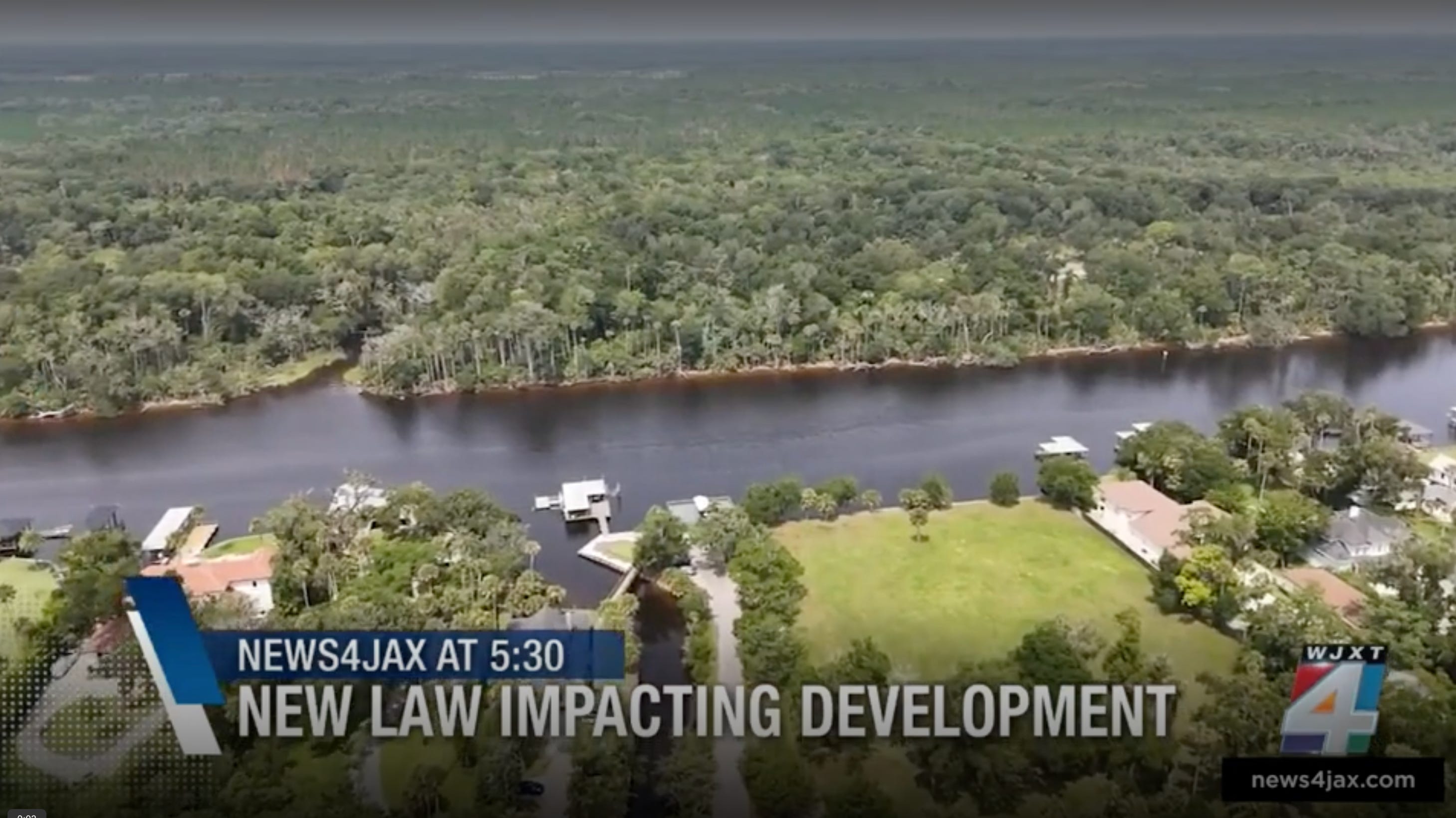
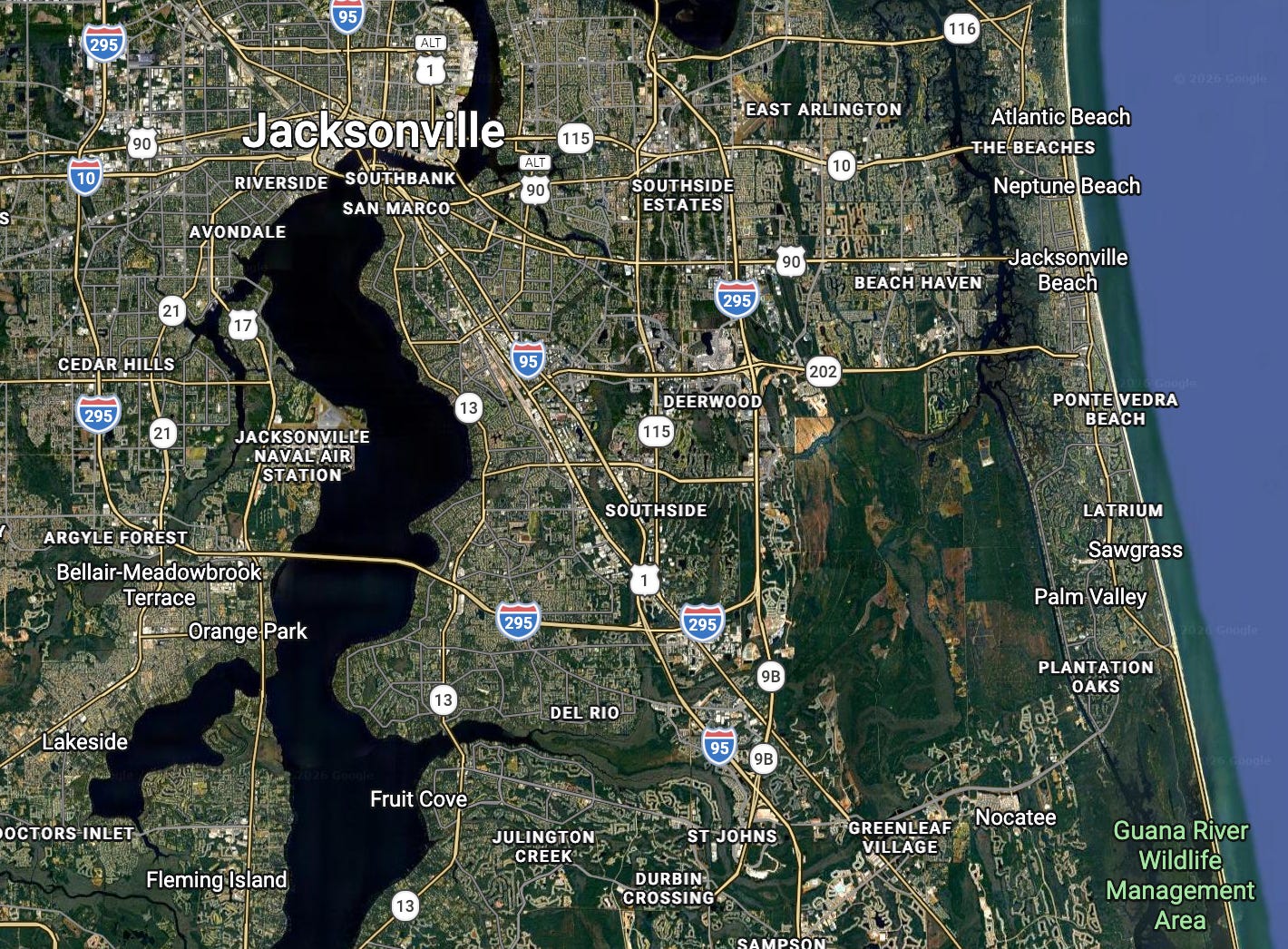
One of the largest developers in Florida is pouncing on the agricultural land development law, which passed the Florida Legislature as Senate Bill 686. The Davis family of northeast Florida — best known as the founders of the Winn-Dixie grocery chain — is poised to lock in entitlements for thousands of new homes on a nearly 4,500-acre tract of forest on the Intercoastal Waterway, between Jacksonville and Ponte Vedra Beach.
A real-estate firm called SoHo Capital is pursuing similar plans on more than 1,000 acres of pasture and timberlands 25 miles north of Tampa.
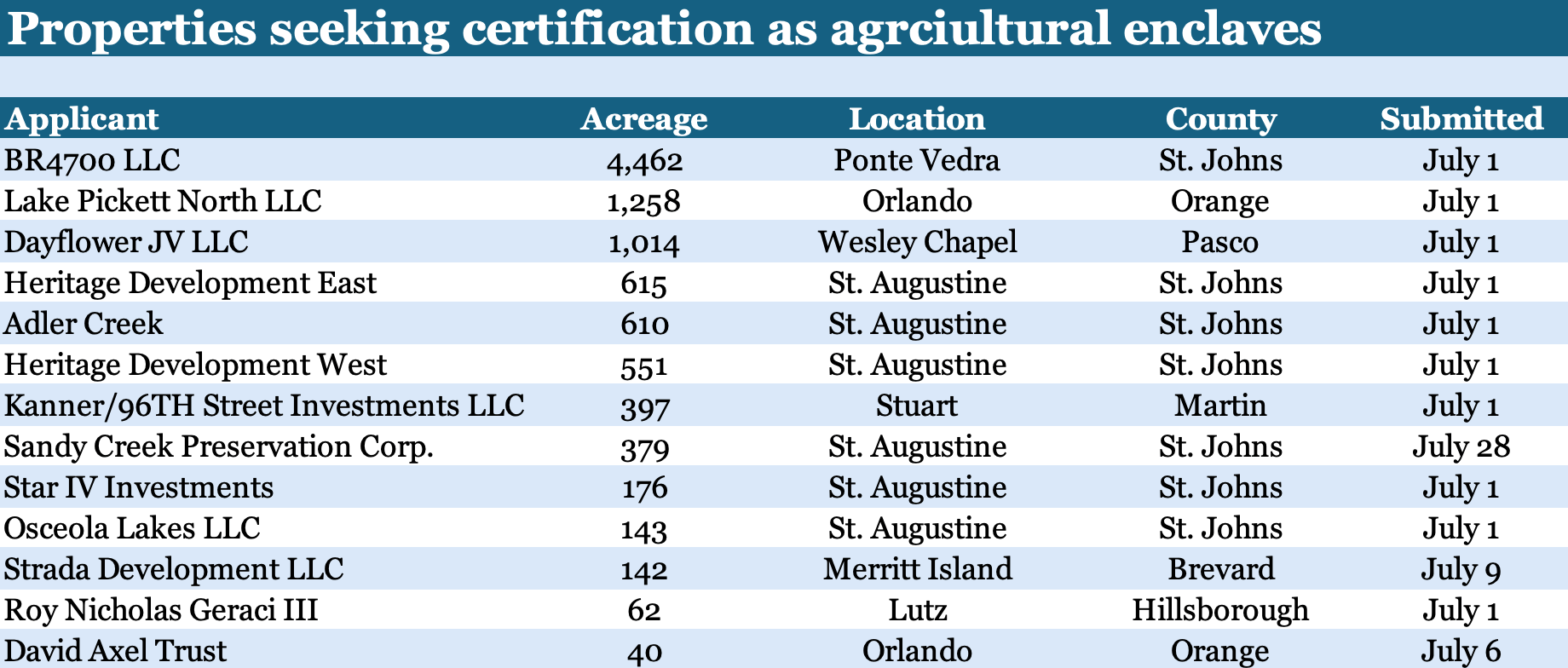
Altogether, more than a dozen projects have been submitted across five counties since Senate Bill 686 went into effect on July 1, according to a Seeking Rents survey of county governments in high-growth parts of the state. The proposals cover a combined 10,000 acres of agricultural land now likely to be replaced with rooftops.
That’s more than 15 square miles.
Changing the definition of ‘enclave’
Senate Bill 686 passed the Legislature in March by a 90-20 vote in the state House and a 34-2 vote in the Senate. DeSantis signed it into law a month later.
The legislation deals with what are known as “agricultural enclaves” — undeveloped farms, pastures and forests near urban centers that have become encircled by development. A property that qualifies as an agricultural enclave essentially gains legal rights that empower the owner to have the land rezoned for development without the local county commission rejecting it as sprawl.
Florida has had an agricultural enclave law on the books for about 20 years. But Senate Bill 686 has dramatically expanded the types of properties that can qualify as enlaves.
For instance, under the old law, a property up to 1,280 acres could generally get certified as an agricultural enclave if it was at least 75 percent surrounded by land that has already been developed or approved for future development. But under Senate Bill 686, the property can now become an enclave if some of that boundary is an interstate highway — regardless of what is on the other side of the freeway.
That’s one of the provisions now being cited by Heritage Development, which has applied for agricultural enclave status on two tracts of land totaling nearly 1,200 acres and straddling I-95 in Elkton, about an hour south of Jacksonville. The company has previously proposed a roughly 3,700-home master-planned community on the land called “Parrish Farms.”
A property can now also become an enclave if it is within a “rural study area.” That’s the pathway being used by Lake Pickett North LLC, the development entity behind “Sustanee,” a roughly 1,800-home project on the far eastern outskirts of Orlando that has been repeatedly rejected by Orange County commissioners.
Florida’s previous law also allowed some larger properties — up to 4,480 acres, or 7 square miles — to qualify as enclaves. But only if they were completely surrounded by existing or approved residential development.
Senate Bill 686 lowered that threshold so that large tracts of land can now be certified as enclaves if there is current or future housing on three sides of the property. That change is what has enabled the Davis family — via a development entity they own called BR4700 LLC — to apply for enclave certification on a 4,462-acre parcel on the northern border of Nocatee.
And Senate Bill 686 created yet another new way to qualify for slightly smaller parcels of land. A property up to 700 acres no longer needs to be surrounded by development at all; it can still be certified as enclave if just 50 percent of the property borders land that has been developed or rezoned for future development.
Among the developers using this new option is Ponte Vedra Beach-based Eastland Partners. It has applied for enclave status on a 610-acre property where it has previously proposed a roughly 1,700-home project called “Adler Creek” — a project that St. Johns County commissioners rejected in late 2022.
A law written by developers, for developers
If Senate Bill 686 seems exceptionally well-tailored for some of these properties, that’s probably because lobbyists for some of the same developers helped to write it.
For instance, emails obtained through public records requests show that the legislation’s sponsors — Sen. Stan McClain, a Republican from Ocala, and Rep. Adam Botana, a Republican from Bonita Springs — shared early drafts of the bill and solicited feedback from Oscar Anderson, a lobbyist with the Southern Group, one of the largest lobbying firms in Florida.
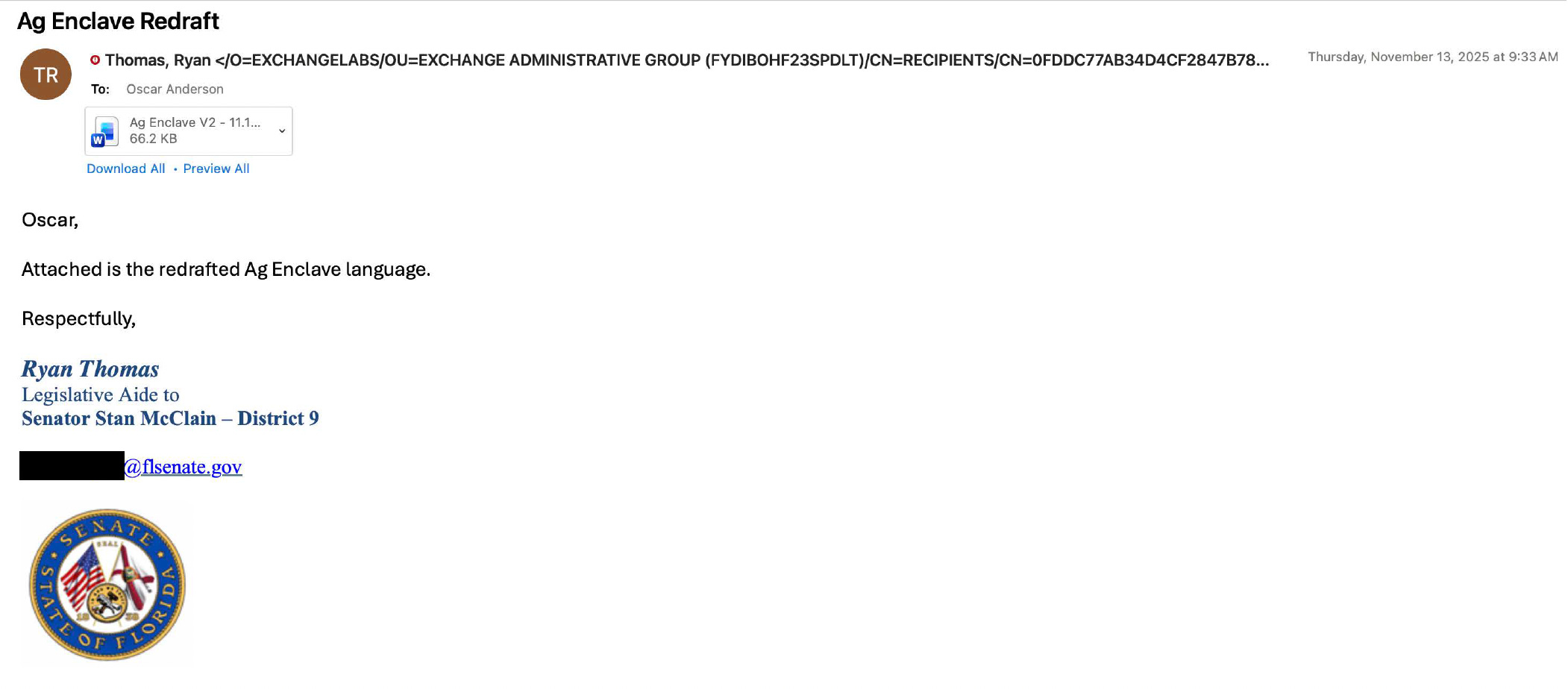
The emails were first obtained by Orlando journalist McKenna Schueler, who writes for the Orlando Weekly newspaper and publishes a newsletter on labor policy called Caring Class Revolt. Schueler shared the records with Seeking Rents.
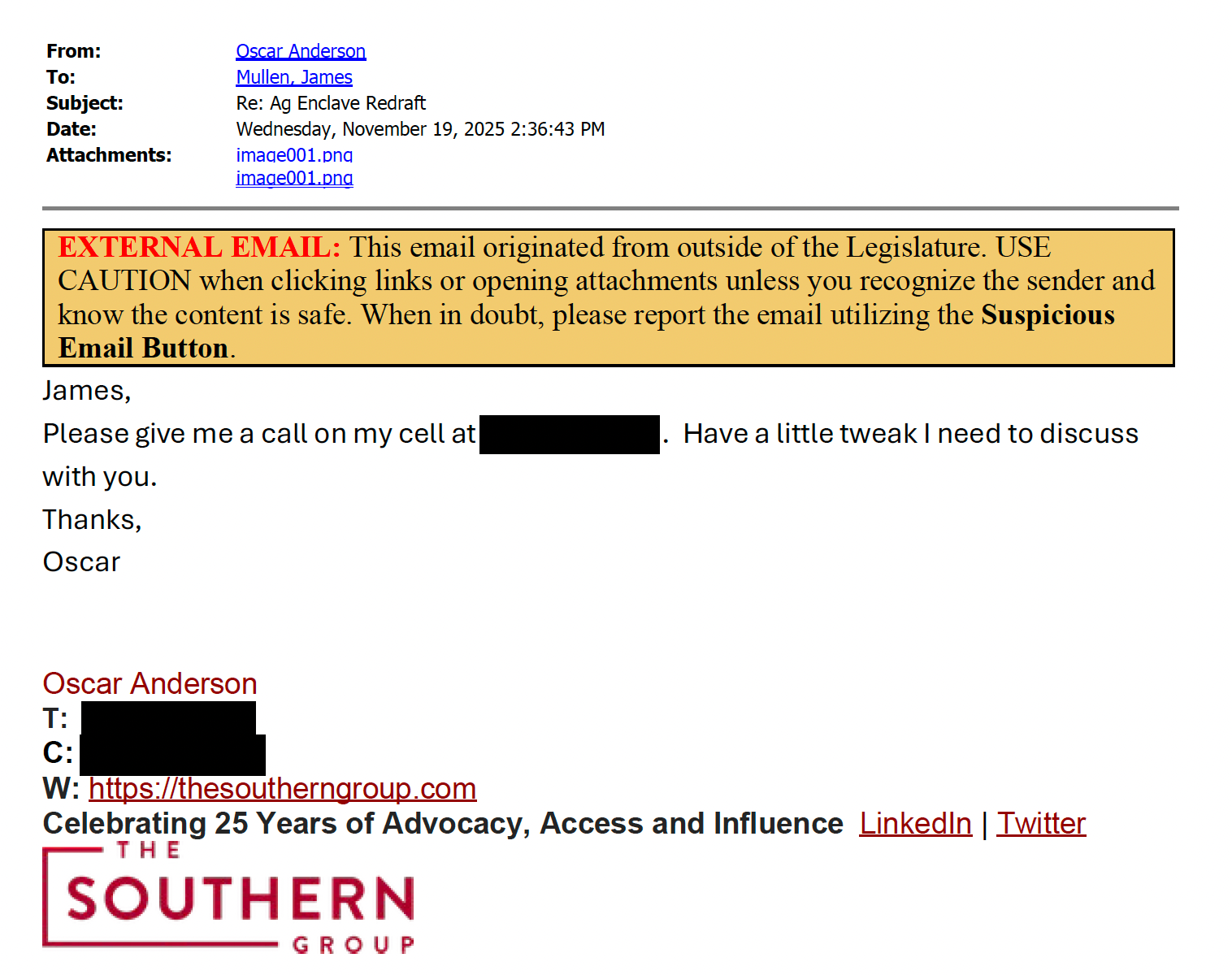
Anderson identified his client on the agricultural enclave legislation as the “Alliance for Commercial Real Estate,” a nonprofit whose mission is “to promote the common business interests of the commercial real estate industry” that records show has spent at least $100,000 so far this year on lobbyists in Tallahassee. The organization’s original directors included Kelly Cohen, another Southern Group lobbyist.
Neither Anderson nor Cohen would identify members of the Alliance for Commercial Real Estate. But the Southern Group also represents a host of real-estate developers — including a company called Estuary LLC, which is one of the Davis family’s main development companies.
And Estuary LLC owns BR4700 LLC, the land-owning entity now seeking agricultural enclave status on the 4,400-acre tract of timberlands southeast of Jacksonville. That’s according to documentation submitted to St. Johns County as part of its agricultural enclave application.

The Southern Group wasn’t the only lobbying shop working the legislation.
Separate records obtained by Seeking Rents show that attorneys at the law firm Stearns Weaver Miller were also lobbying for the agricultural enclave proposal, which first surfaced in the Florida Legislature in 2024.
Stearns Weaver Miller’s clients include at least two developers now seeking agricultural enclave designations under Senate Bill 686: Kolter Land, the homebuilder behind “Waterside” in Martin County and Heritage Development, the company pitching “Parrish Farms” in St. Johns County.
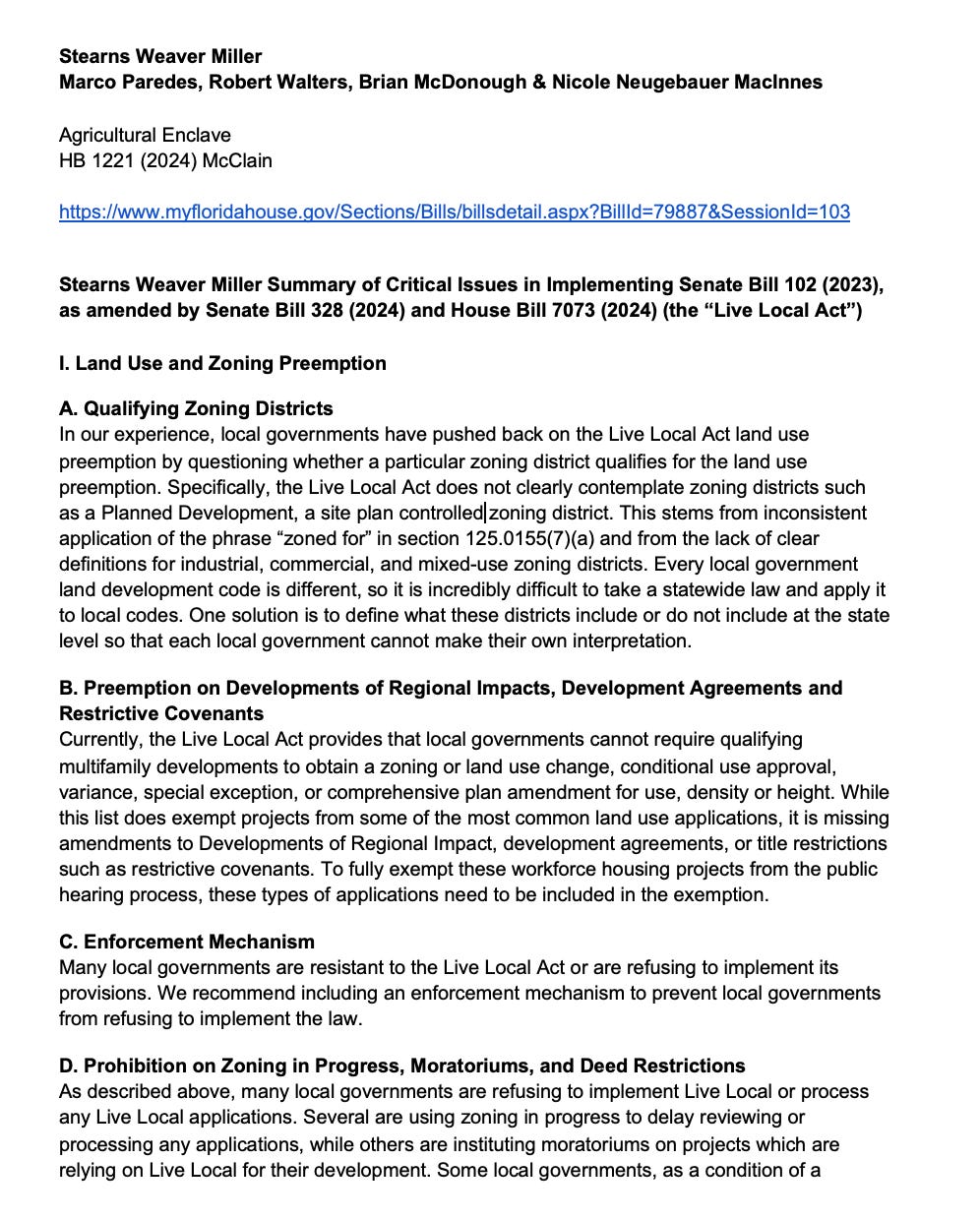
Many of these developers are also major campaign contributors.
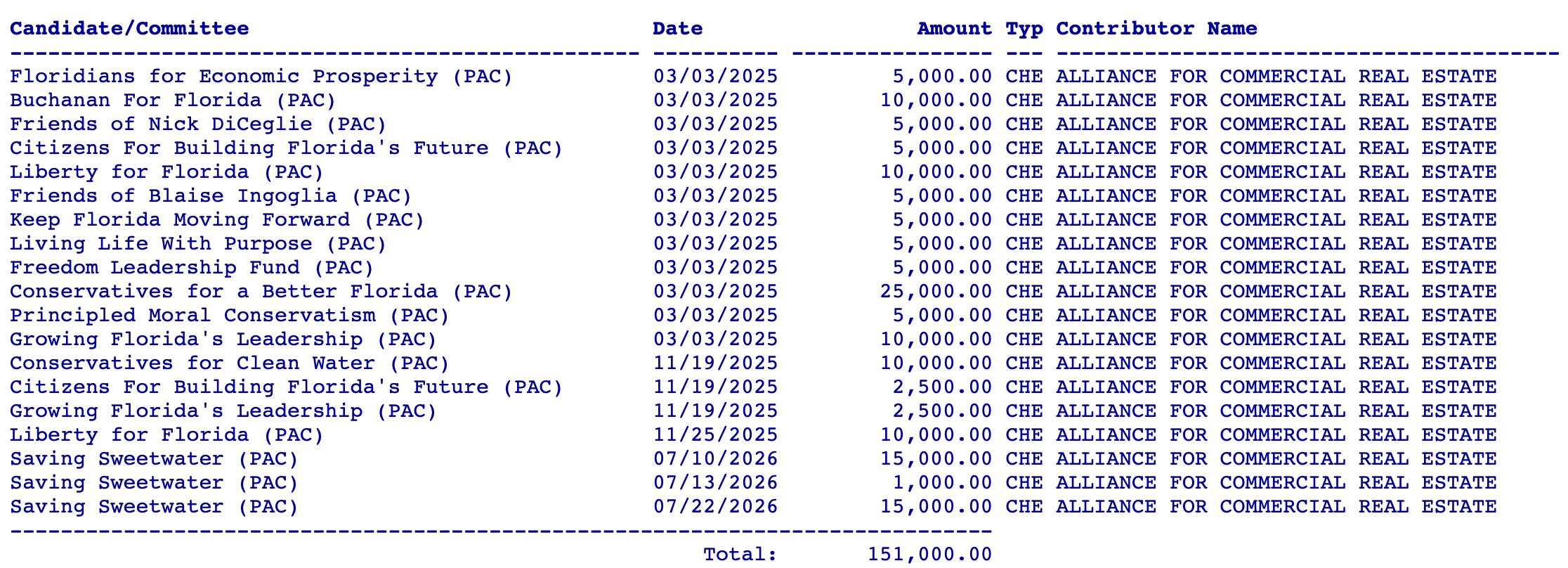
Records show, for instance, that the Alliance for Commercial Real Estate has donated more than $100,000 to Florida lawmakers over the past 17 months or so. The donations included $10,000 gifts to McClain and Botana in November 2025 — the same month the two lawmakers were working with an Alliance lobbyist on the agricultural enclave legislation.
That same month, Eastland Partners made a $10,000 donation to Sen. Tom Leek, a high-ranking Republican from Ormond Beach who is in line to become president of the Florida Senate in a few years. Leek also represents St. Johns County — which has been hit with more agricultural enclave applications than any other county in Florida so far.
A subsidiary of Kolter Land also gave $5,000 to McClain just before the start of the 2025 legislative session, when McClain sponsored a similar agricultural enclave bill that failed to pass.
And records show that Davis family companies — primarily an entity known as “Big Creek Timber LLC,” which is also controlled by Estuary LLC — made more than $200,000 in campaign contributions shortly before Florida’s 2026 legislative session, which began in January.
The Davis family donations included $5,000 to McClain, $10,000 to Botana, $15,000 to Leek, $25,000 to Senate President Ben Albritton (R-Wauchula) and $50,000 to the Republican Party of Florida.

Tallahassee handcuffs local governments again
Once a property has been certified an agricultural enclave there is very little a community can do to stop it from being developed — thanks, again, to the changes wrought by Senate Bill 686.
Under the new law, a county’s planning staff has just 30 days to determine whether a property meets any of the various legal definitions of agricultural enclave. Once that happens, the county commission must hold a public hearing within 30 days to vote on whether or not to approve the designation as an enclave.
If the property is approved as an agricultural enclave, a developer that can then submit residential development plans. And if the development plan is similar in density to any other neighboring parcel, it is automatically deemed to be in compliance with local long-range planning maps — regardless of the property’s underlying zoning or future land use.
Would you like to support Seeking Rents without becoming a subscriber?
Already a paid subscriber but want to do more to help sustain my work?
Click below to make a one-time donation.
A county can refuse to certify a property as an agricultural enclave. But Senate Bill 686 gives landowners explicit legal rights to challenge a denial in state court — and puts the burden of proof on the county.
That said, Senate Bill 686 may not be fully settled just yet.
St. Johns County — which is currently scheduled to hold six agricultural enclave hearings later this month — is exploring a potential a legal challenge to the new law, according to Jacksonville Today.

Florida used to have a land development principle of “concurrency”. That essentially required developers to pay for additional infrastructure capacity as property was developed - usually via impact fees. It has largely been abandoned or unenforced. Our taxes paid to put roads, sewers, public safety, water, schools etc. in place and the developers want to expropriate some of that capacity for themselves for free. At a minimum, they should pay for what they take. No corporate welfare.
Development almost never “pays for itself” and the proposed property tax repeal will make the public costs even higher.
SB686 and its potential effects on St. Johns County has been a trending topic on the local NextDoor site since the Davis family announced their intentions for that awesome green space on the map J provided readers. And, thanks, as always, to J for providing the vote tallies. Passing it on.